

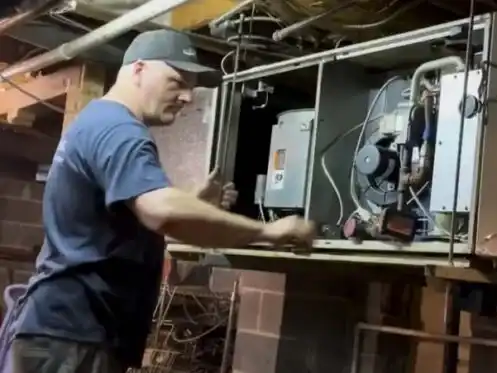
National furnace repair costs average $300–$600 for common issues. This report provides labor rate foundations from BLS wage data, component pricing bands, and repair versus replacement thresholds based on DOE technical standards. Cost ranges reflect national HVAC technician billing rates ($75–$150/hour), typical repair durations, and parts pricing validated against consumer-reported market data.
What You’ll Learn in This Report
|
Key Findings at a Glance
|
National Furnace Repair Cost Ranges by Problem Type
Cost bands reflect labor (1–8 hours at national HVAC technician rates) plus parts for the most frequently reported furnace issues.
Regional variation:
Metro areas typically fall in the upper portions of these ranges due to higher cost of living, labor rates, and service quality standards. Local quotes may exceed these national averages in premium markets.
| Problem Type | National Cost Range | Typical Repair Time | Primary Cost Driver |
|---|---|---|---|
| Ignitor replacement | $150–$500 | 1–2 hours | Part cost variation by furnace model |
| Flame sensor cleaning/replacement | $150–$300 | 1 hour | Minimal part cost; primarily labor |
| Thermostat repair or replacement | $100–$600 | 1–2 hours | Device type (manual vs. smart) |
| Blower motor repair or replacement | $300–$2,000 | 2–4 hours | Motor size, ECM vs. standard, access |
| Gas valve replacement | $200–$600 | 2–3 hours | Part cost plus gas-safe certified labor |
| Circuit board replacement | $200–$600 | 1–2 hours | OEM vs. aftermarket board pricing |
| Heat exchanger replacement | $600–$1,500 | 4–8 hours | Labor-intensive; often triggers replacement |
| Draft inducer motor replacement | $200–$1,500 | 2–4 hours | Motor specifications and accessibility |
Furnace Repair Cost by Component
Parts-only pricing vs. installed totals, based on typical HVAC contractor markups and installation time requirements.
| Component | Part Cost | Installed Cost | Notes |
|---|---|---|---|
| Furnace filter | $5–$35 | $5–$35 | DIY or included in service |
| Transformer | $20–$40 | $100–$175 | 1-hour labor |
| Flame sensor | $50–$100 | $150–$300 | Simple access on most models |
| Ignitor | $100–$250 | $150–$500 | Model-specific; common failure |
| Thermostat | $50–$400 | $100–$600 | Smart models at the upper end |
| Gas valve | $100–$300 | $200–$600 | Gas-certified technician required |
| Circuit board | $150–$450 | $200–$600 | OEM parts are more expensive |
| Draft inducer motor | $150–$1,200 | $200–$1,500 | Variable-speed models cost more |
| Blower motor | $200–$1,500 | $300–$2,000 | ECM motors at upper end |
| Heat exchanger | $500–$1,200 | $600–$1,500 | Labor-intensive; may not be economical on older units |
Source context:
Part pricing aggregated from
Forbes Home
consumer-reported costs; labor based on BLS national HVAC wage data plus standard overhead multipliers (2.0–2.5×).
Cost Factors That Affect Your Furnace Repair Bill
Furnace Type and Fuel Source
| Furnace Type | Typical Repair Range | Common Issues |
|---|---|---|
| Natural gas | $150–$900 | Ignitor, gas valve, flame sensor, pressure switch |
| Electric | $100–$700 | Heating elements, sequencer, blower motor, limit switch |
| Oil | $200–$1,000 | Nozzle, fuel pump, combustion chamber, electrodes |
| Propane | $150–$900 | Similar to natural gas; valve and ignition components |
System Age and Parts Availability
Furnaces 15+ years old frequently require discontinued parts. Aftermarket components or custom fabrication add cost and lead time.
Accessibility and Installation Complexity
Installation location significantly impacts labor time:
- Basement (open access): Standard labor rates
- Crawl space: Add 30–50% labor time
- Attic installation: Add 40–60% labor time
Difficult access can add $50–$200 to the total repair cost.
Timing and Service Urgency
| Service Window | Typical Rate Adjustment |
|---|---|
| Weekday business hours | Standard rate |
| Evening (5 PM–10 PM) | 1.5× standard |
| Late night (10 PM–6 AM) | 2× standard |
| Weekend days | 1.5× standard |
| Holidays | 2×–2.5× standard |
Emergency surcharges typically add $100–$300 to standard repair costs.
Repair vs. Replacement Decision Framework
Financial analysis framework for homeowners deciding between repair and new system installation.
| Decision Factor | Favor Repair | Favor Replacement |
|---|---|---|
| System age | Under 10 years | 15+ years |
| Single repair cost | Under $500 | Over $1,000 |
| Recent repair history | First major issue in 5+ years | Multiple repairs within 2 years |
| Efficiency (AFUE) | 90%+ | Below 80% |
| Warranty status | Parts/labor still covered | Expired warranty |
| Energy cost trend | Stable year-over-year | Rising 15%+ annually |
The 50% Rule
Industry standard: If repair cost exceeds 50% of replacement cost AND the furnace is 12+ years old, replacement typically offers better long-term value.
Methodology
How National Cost Ranges Were Derived
Labor rate foundation: U.S. Bureau of Labor Statistics May 2023 data shows HVAC mechanics and installers earn a national median wage of $26.20/hour. Contractor billing rates apply standard industry multipliers (2.0–2.5×) to cover overhead (insurance, vehicles, tools, licensing) and profit margin, yielding typical billed labor rates of $75–$150/hour nationally.
Parts pricing methodology: Furnace component costs compiled from manufacturer MSRP data where publicly available, distributor wholesale pricing patterns, and consumer-reported total job costs (Forbes Home) with labor backed out. Contractor markups on parts typically range 1.5–2.5× wholesale cost.
Job time estimates: Repair duration bands based on ACCA (Air Conditioning Contractors of America) standard service times for residential systems, field technician time studies, and consumer-reported service appointment durations.
Note on Regional Pricing Variation
These national cost ranges represent typical pricing across diverse U.S. markets. Actual costs in your area may vary based based on:
- Regional labor rates and cost of living
- Service provider expertise and certifications
- Emergency vs. scheduled service timing
- System accessibility and complexity
Major metro areas and premium service markets typically fall in the upper portions of these ranges or may exceed them. Request local quotes for accurate pricing in your specific market.
Sources
U.S. Bureau of Labor Statistics:
- Occupational Employment and Wages, May 2023: HVAC Mechanics and Installers (49-9021)
– National and regional wage data, employment levels, percentile distributions.
U.S. Department of Energy:
- Energy Saver: Furnaces and Boilers
– Technical maintenance guidance, efficiency standards, replacement decision factors.
U.S. Environmental Protection Agency:
- Section 608 Technician Certification
– Refrigerant handling requirements, HVAC technician certification standards, regulatory compliance.
Air Conditioning Contractors of America:
- Quality Standards for Residential HVAC Systems
– Industry maintenance inspection standards, service procedures, quality installation specifications.
U.S. Energy Information Administration:
- Natural Gas Prices – Residential
– National and regional residential natural gas pricing data for heating cost context.
American Society of Heating, Refrigerating, and Air-Conditioning Engineers:
- Standard 180: HVAC Inspection and Maintenance
– Minimum inspection and maintenance requirements for system efficiency and thermal comfort.
Forbes Home:
- Furnace Repair Home Improvement Guide
— Aggregated contractor pricing and consumer-reported ranges used as secondary market validation.


