

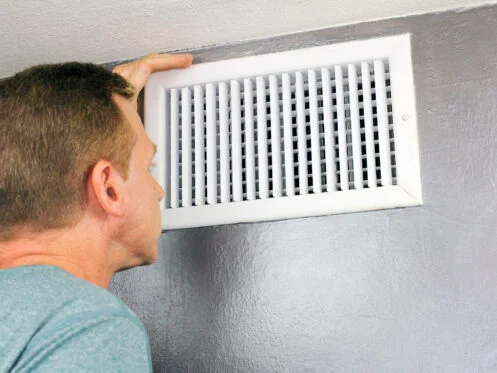
Air duct cleaning is not a service every home automatically needs. The U.S. Environmental Protection Agency advises cleaning only in specific situations, such as visible mold growth, vermin infestation, or heavy dust and debris release from supply registers. When cleaning is justified, national residential pricing usually falls within a broad range because home size, duct accessibility, and contamination level all affect labor time and scope.
What You’ll Learn in this Report
|
National Air Duct Cleaning Cost Range
National price estimates vary by source, but the consensus range is broad enough to capture both light-duty cleaning and larger, more complex jobs.
| Source | Typical Cost Range | Notable Benchmark |
|---|---|---|
| NADCA homeowner guidance | $450 to $1,000 | Typical range for a professional cleaning job |
| Fixr 2026 guide | Around $450 to $1,000 | The average is near $700 for a standard home |
| Modernize | About $300 to $700 | Per-square-foot framing is also available |
Interpretation note: For planning purposes, a homeowner can treat $300 to $1,000 as a useful national working range. Lower totals usually reflect small homes or easier access. Higher totals are more common in larger homes or in systems with heavier contamination.
Air Duct Cleaning Cost by Home Size
Home size is one of the easiest pricing variables to understand. More square footage often means more registers, longer trunk lines, and more labor.
| Home Size | Square Footage | Typical Cost Range |
|---|---|---|
| Small home | Under 1,500 sq ft | $300 to $450 |
| Medium home | 1,500 to 2,500 sq ft | $450 to $700 |
| Large home | 2,500 to 4,000 sq ft | $700 to $1,000 |
| Very large home | Over 4,000 sq ft | $1,000 and up |
Key takeaway: These are planning ranges, not flat quotes. A compact home with difficult access can cost more than a larger home with open, accessible ductwork.
When Duct Cleaning Is Actually Recommended
This is where EPA guidance matters most. The agency does not recommend duct cleaning as routine maintenance. It recommends cleaning when one or more of these conditions exist:
| Condition | Why Cleaning May Be Appropriate |
|---|---|
| Visible mold growth | Mold in hard-surface ducts or on HVAC components may justify cleaning and further inspection. Mold indicates moisture problems that should be identified and corrected. |
| Vermin infestation | Rodents or insects in ductwork pose contamination concerns due to droppings and nesting materials that require professional removal. |
| Heavy debris release | Excessive dust or debris coming from supply registers suggests the system should be inspected. Visible debris discharge indicates cleaning may improve indoor air conditions. |
Key takeaway: EPA guidance supports a selective approach based on actual system conditions rather than automatic scheduling. The agency notes that knowledge about air duct cleaning remains limited, with no evidence that routine cleaning prevents health problems.
Main Cost Drivers
The final invoice usually depends less on one fixed national average and more on a few practical site conditions.
| Cost Driver | Lower Cost Scenario | Higher Cost Scenario |
|---|---|---|
| Home size | Small homes with fewer vents and shorter duct runs | Large homes with 25-plus vents and extensive ductwork |
| Accessibility | Open basements or accessible attics | Tight crawl spaces, finished ceilings, or multi-story layouts |
| Contamination level | Light dust accumulation from normal use | Heavy debris, mold presence, or pest infestation cleanup |
| Number of HVAC systems | Single system serving the entire home | Multiple systems or zones requiring separate cleaning |
| Ductwork type | Standard sheet metal ducts with easy access | Flexible ducts requiring more care or hard-to-reach configurations |
| Service provider credentials | Non-certified providers using standard equipment | NADCA-certified professionals with advanced equipment |
Key takeaway: Accessibility often has a bigger effect on labor than square footage alone. A straightforward single-system layout is usually faster than a home with hard-to-reach duct runs or multiple air handlers.
Common Pricing Structures
Contractors may quote duct cleaning in more than one way. The structure affects how easy it is to compare bids.
| Pricing Method | How It Works | Typical Rate | Best Application |
|---|---|---|---|
| Flat-rate package | One total price for the visible scope | $300 to $600 typical | Standard homes up to a certain size limit |
| Per square foot | Rate based on home size | $0.15 to $0.25 per sq ft | Homes with standard layouts |
| Per vent or register | Charge per supply and return opening | $25 to $50 per vent | Smaller homes with fewer vents |
| Hourly rate | Charges for labor time | $75 to $125 per hour | Less common for standard residential |
Key takeaway: Per-square-foot pricing provides predictable costs but may not account for unusual duct configurations. Per-vent pricing works well for smaller homes but can become expensive when vent counts exceed 15 to 20 openings. Flat-rate packages offer simplicity for homes within specified parameters.
NADCA Standards and Why They Matter
NADCA is the primary trade organization responsible for duct cleaning standards. Its standards and publications help define what a legitimate cleaning process should include and how cleanliness should be evaluated.
NADCA certification programs:
| Certification | What It Indicates |
|---|---|
| ASCS (Air Systems Cleaning Specialist) | Technical knowledge of HVAC cleaning procedures, equipment operation, and safety protocols |
| CVI (Certified Ventilation Inspector) | Training in system assessment, airflow measurement, and cleanliness verification testing |
ACR Standard requirements:
| Standard Element | What It Requires |
|---|---|
| Cleaning thoroughness | Ductwork must be cleaned to remove all non-adhering substances visible through inspection |
| Verification | Cleanliness verification through visual inspection or alternative testing methods |
| Documentation | Records showing that cleaning objectives were achieved |
Key takeaway: For homeowners, NADCA certification provides quality verification and reduces the likelihood of encountering incomplete work or bait-and-switch tactics. Certified technicians have a reputational stake through association membership.
Additional Services and Associated Costs
Several related services often accompany air duct cleaning quotes. Understanding separate pricing for these items prevents confusion when comparing proposals.
| Additional Service | Typical Cost Range | Notes |
|---|---|---|
| Dryer vent cleaning | $100 to $200 | Separate from HVAC ducts; addresses fire risk from lint accumulation |
| Furnace/air handler cleaning | $100 to $300 | Blower motor, housing, and accessible components beyond ductwork |
| Evaporator coil cleaning | $150 to $400 | Requires accessing the air handler; improves efficiency when coils are dirty |
| Sanitizing/disinfecting treatment | $50 to $150 | Antimicrobial spray application after mechanical cleaning |
| Mold remediation | $500 to $3,000 plus | Requires specialized protocols beyond standard duct cleaning |
| UV light installation | $400 to $1,500 | Permanent air purification; not a cleaning service |
| Duct sealing | $1,000 to $2,500 | Separate service addressing leakage; not part of cleaning |
Key takeaway: Dryer vent cleaning remains distinct from HVAC duct cleaning despite frequently appearing in bundled service offers. Dryer vents require different equipment and address fire safety rather than indoor air quality. Mold remediation costs escalate beyond standard duct cleaning due to containment requirements and antimicrobial treatment protocols.
Warning Signs of Duct Cleaning Scams
The air duct cleaning industry includes legitimate professionals and deceptive operators who use high-pressure tactics. Recognizing warning signs protects homeowners from common scams.
| Red Flag | Legitimate Practice |
|---|---|
| Advertised pricing under $100 for whole-house cleaning | Provides realistic estimates based on the actual scope |
| Unsolicited telemarketing or door-to-door sales | Established reputation through referrals and reviews |
| High-pressure tactics or “today only” discounts | Allows time for consideration and comparison shopping |
| Refusal to provide written estimates | Provides detailed written estimates before beginning work |
| Claims duct cleaning dramatically reduces energy bills | Explains realistic expectations without exaggerated claims |
| No NADCA certification or professional credentials | Shows proof of certification, insurance, and business license |
Key takeaway: Very low advertised prices often do not reflect the full scope of work and lead to aggressive upselling once technicians arrive. Legitimate contractors explain when duct cleaning is beneficial versus unnecessary based on actual inspection.
A Simple Cost Example
A 2,000-square-foot home with one HVAC system and ordinary duct access often falls near the middle of the national range. In that kind of scenario, a homeowner might see pricing around $450 to $700. A larger house, or a system with heavier buildup, can move toward $1,000 or more.
Notes
Air duct cleaning is condition-based, not automatically routine. EPA guidance should shape the decision. National cost data varies by source, with most planning ranges falling between $300 and $1,000 for residential work. Additional services can change the total materially. Coil cleaning, sanitizing, or dryer vent cleaning are often priced separately. Always verify contractor credentials and request written estimates before work begins.
Sources
U.S. Environmental Protection Agency: Should You Have the Air Ducts in Your Home Cleaned?
NADCA: Standards and Publications
NADCA: Cost & Time Estimates
Modernize: Air Duct Cleaning Costs | 2026 Cost Guide
Fixr: How Much Does Air Duct Cleaning Cost in 2026?


