

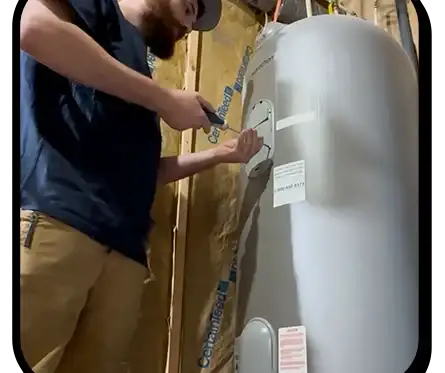
Replacing a residential water heater in the United States costs between $1,600 and $5,400 installed, with heat pump models ranging from $3,600 to $6,500, depending on fuel source conversion and installation complexity.
Key Findings at a Glance
|
Average Water Heater Replacement Cost by Type
This table shows what Poconos homeowners typically pay for water heater replacement, including equipment, labor, and materials.
| Water Heater Type | Average Cost | Typical Range | Installation Time |
|---|---|---|---|
| Standard electric tank | about $1,900 | $1,500 to $2,500 | 2 to 4 hours |
| Standard gas tank | about $2,100 | $1,700 to $2,700 | 3 to 5 hours |
| Tankless electric | about $3,200 | $2,500 to $4,000 | 4 to 8 hours |
| Tankless gas | about $3,500 | $2,500 to $4,500 | 4 to 8 hours |
| Heat pump (replacing electric) | about $4,200 | $3,600 to $4,800 | 4 to 6 hours |
| Heat pump (replacing gas) | about $5,400 | $4,300 to $6,500 | 6 to 10 hours |
Key takeaway: Heat pump water heaters cost $2,200 to $3,400 more upfront than standard tank replacements, but more complex fuel-switching installations add significant electrical work requirements, pushing costs toward the upper range.
Water Heater Replacement Cost by Component
Individual cost components vary based on complexity and household hot water needs.
| Component/Capacity | Equipment Cost | Installation Cost | Total Installed Cost |
|---|---|---|---|
| 30-gallon electric tank | $400 to $800 | $300 to $600 | $700 to $1,400 |
| 40-gallon electric tank | $450 to $900 | $350 to $700 | $800 to $1,600 |
| 50-gallon electric tank | $500 to $1,000 | $400 to $800 | $900 to $1,800 |
| 40-gallon gas tank | $600 to $1,100 | $400 to $800 | $1,000 to $1,900 |
| 50-gallon gas tank | $700 to $1,200 | $500 to $900 | $1,200 to $2,100 |
| Tankless electric | $800 to $1,500 | $800 to $1,500 | $1,600 to $3,000 |
| Tankless gas | $1,000 to $2,000 | $1,200 to $2,500 | $2,200 to $4,500 |
| Heat pump water heater | $1,500 to $2,500 | $800 to $1,500 | $3,600 to $4,800 |
| Expansion tank | $50 to $150 | $100 to $250 | $150 to $400 |
| Water heater drain pan | $30 to $100 | $75 to $150 | $105 to $250 |
| Recirculation pump | $200 to $400 | $200 to $400 | $400 to $800 |
Key takeaway: Installation labor accounts for 30% to 50% of the total replacement cost for standard tank installations, rising to 50% to 60% for tankless and heat pump installations that require electrical or venting modifications.
Cost Factors That Affect Water Heater Replacement Bills
Several variables influence what you’ll pay to replace your water heater. Understanding these helps you anticipate costs and compare estimates accurately.
Existing Fuel Source and Conversion
Like-for-like replacements cost less than fuel-switching installations. Converting from gas to electric heat pump water heaters requires electrical work that adds substantially to the total cost.
| Conversion Type | Additional Cost | What’s Required |
|---|---|---|
| Electric to electric | Baseline | Standard installation |
| Gas to gas | Baseline | Standard installation plus venting |
| Gas to electric heat pump | +$700 to $2,000 | Electrical panel work, new circuit installation |
| Electric to tankless electric | +$500 to $1,500 | Upgraded electrical service and panel |
Key takeaway: Fuel-switching installations add 20% to 45% to total replacement cost compared to like-for-like replacements, with electrical panel upgrades representing the primary cost driver.
Water Heater Capacity
Larger capacity water heaters cost more for both equipment and installation. Capacity needs depend on household size and hot water usage patterns.
| Household Size | Recommended Capacity | Typical Cost Range |
|---|---|---|
| 1 to 2 people | 30 to 40-gallon tank | $1,200 to $1,900 |
| 3 to 4 people | 50-gallon tank | $1,500 to $2,500 |
| 5+ people | 75 to 80-gallon tank | $2,000 to $3,500 |
Key takeaway: Increasing capacity from 40 to 50 gallons adds about $200 to $400 to the total replacement cost, while oversizing beyond household needs adds upfront cost without delivering proportional benefits.
Installation Location and Access
Basement installations with clear access represent baseline costs. Attic installations, crawl spaces, and locations requiring equipment to be moved through narrow doorways or tight spaces increase labor time by 1 to 3 hours, adding $75 to $450.
Permit Requirements
Pennsylvania and Monroe County require permits for water heater replacement. Permit costs run $50 to $200. Code-required safety equipment, including expansion tanks and upgraded venting, adds $150 to $600 in materials.
Water Heater Technology
Heat pump water heaters cost more upfront but deliver substantial energy savings. Standard tank water heaters offer lower initial costs. Tankless models fall between standard tanks and heat pumps in upfront investment but require more complex installation.
Operating Cost Comparison by Water Heater Type
Technology choice significantly impacts both upfront replacement cost and long-term operating expenses. This table shows annual energy costs for different water heater technologies.
| Water Heater Type | Uniform Energy Factor (UEF) | Annual Energy Use (kWh) | Annual Energy Cost | 13-Year Lifetime Cost |
|---|---|---|---|---|
| Best Available Heat Pump | 3.93 | 826 | $82 | $792 |
| ENERGY STAR Heat Pump | 3.3 | 984 | $97 | $940 |
| Standard Electric Tank | 0.95 | 3,437 | $340 | $3,440 |
Key takeaway: Heat pump water heaters deliver $2,500 to $2,647 in lifetime energy savings over 13 years compared to standard electric tanks, offsetting higher upfront replacement costs through reduced operating expenses within the equipment’s expected lifespan.
Methodology
This analysis synthesizes water heater replacement cost data from federal energy efficiency programs, regional electrification studies, and national laboratory research. Cost figures reflect published data from the U.S. Department of Energy Federal Energy Management Program (2024), Rewiring America’s electrification cost analysis (2025), and supporting documentation from Lawrence Berkeley National Laboratory and regional air quality management agencies.
Operating cost calculations use federal average electricity prices of 9.9¢/kWh as reported in DOE FEMP guidance. Lifetime cost analysis follows NIST Handbook 135 methodology with 3% discount rates and federal energy price projections. Regional cost data references Northeast and Mid-Atlantic studies relevant to the Pennsylvania and Pocono Mountains service area.
Installation cost ranges represent typical residential replacement scenarios and may vary based on site-specific conditions, local labor markets, and utility incentive availability.
Sources
U.S. Department of Energy, Federal Energy Management Program: “Purchasing Energy-Efficient Residential Water Heaters” – May 2024
Rewiring America: “How Much Does a Heat Pump Water Heater Cost?” – 2025
U.S. Energy Information Administration: “Updated Buildings Sector Appliance and Equipment Costs and Efficiencies: Appendix B”
Lawrence Berkeley National Laboratory: “Economics of Residential Gas Furnaces and Water Heaters in United States New Construction Market” – October 2009
Federal Register: “Energy Conservation Standards for Consumer Water Heaters” – May 6, 2024
Ozone Transport Commission: “Heat Pump Water Heaters in the Northeast and Mid-Atlantic: Costs and Market Trends”
Bay Area Air Quality Management District: “Installation Costs for Zero-NOx Space and Water Heating Appliances”
Massachusetts Energy Efficiency Advisory Council: “Water Heating, Boiler, and Furnace Cost Study (RES 19)” – September 2018
Notes
All cost data represents typical residential water heater replacement scenarios as of 2024-2025. Actual replacement costs vary based on geographic location, labor market conditions, existing home infrastructure, local code requirements, and available utility incentive programs.
Federal Energy Management Program data uses standardized assumptions for operating cost calculations, including average federal electricity rates and typical household water consumption patterns. Individual household costs vary based on actual usage, local utility rates, and water heater efficiency settings.
Heat pump water heater efficiency ratings (UEF) reflect laboratory test conditions. Field performance depends on installation location, temperature, hot water demand patterns, and proper maintenance, including regular filter cleaning.
Regional cost data for the Northeast and Mid-Atlantic regions provides context relevant to Pennsylvania markets, including the Pocono Mountains area. Local installation costs should be verified through contractor quotes reflecting site-specific conditions.


